No products added!

अक्टूबर–नवंबर 2026 के प्रमुख त्योहार, व्रत, पूजा विधि और शुभ मुहूर्त – आचार्य श्री मुकेश जी महाराज
आने वाले त्योहार कब हैं और कैसे मनाएँ? भारत में प्रत्येक त्योहार का अपना धार्मिक, सांस्कृतिक और आध्यात्मिक महत्व है।

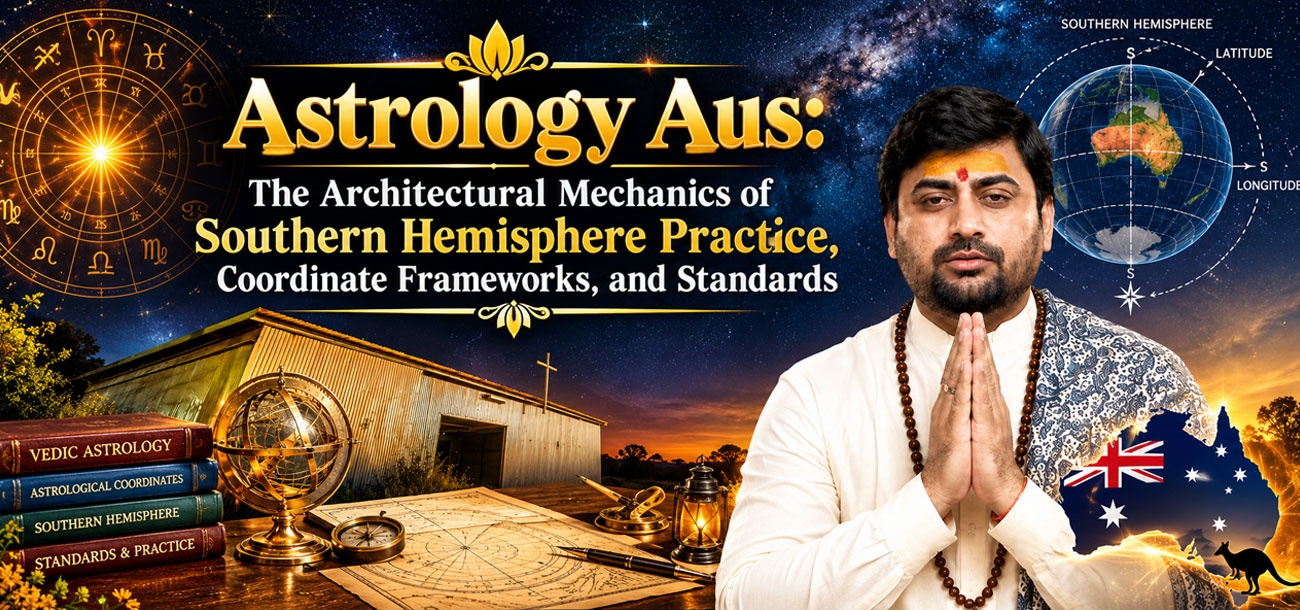
The study and application of astrology aus-wide has undergone a profound structural renaissance over the past five decades. Far from being a passive consumer market for syndicated Northern Hemisphere media, the Australian continent occupies a mathematically unique position in geocentric celestial mechanics. When an astronomical event occurs along the ecliptic plane, the terrestrial orientation of an observer in the Southern Hemisphere inverts the apparent daily transit direction across the local sky, shifting the diurnal visual path from south-facing to north-facing.
Despite this fundamental physical inversion, standard syndicated horoscopes frequently overlook the basic mathematical protocols required for local accuracy. Celestial calculations require strict synchronization with coordinated universal time standards and local terrestrial meridians. Without meticulous adjustment for longitudinal offsets and daylight saving anomalies, any chart erected for an Australian city suffers from angular displacement. This structural error alters house cusps and distorts transit timing.
To practice with technical integrity, an astrologer must understand the underlying astronomy that governs natal synthesis, dynamic forecasting, and client-facing ethics. From the calculation of the oblique ascension to the choice between quadrant and equal house frameworks, practitioners working below the equator face unique analytical demands.
This treatise outlines the complete technical foundation of Southern Hemisphere practice. It explores the mechanics of diurnal motion, ephemeris calibration, angular geometry, and the institutional standards upheld by peak domestic regulatory bodies.
The core theoretical mechanics of Western and Vedic systems depend upon the geocentric ecliptic coordinate system, a foundational concept for anyone calculating astrology aus charts with true mathematical precision. The ecliptic represents the apparent annual path of the Sun against the celestial sphere, tilted relative to the celestial equator by the obliquity of the ecliptic (epsilon ≈ 23° 26′). The intersection of these two primary great circles marks the equinoctial axis, establishing 0° Aries (the Vernal Equinox) and 0° Libra (the Autumnal Equinox).
In the Northern Hemisphere, an observer facing the equator looks south to witness planets culminate at the Midheaven (MC). In this orientation, celestial bodies rise on the eastern left horizon, culminate directly ahead to the south, and set on the western right horizon, moving in an apparent clockwise arc.
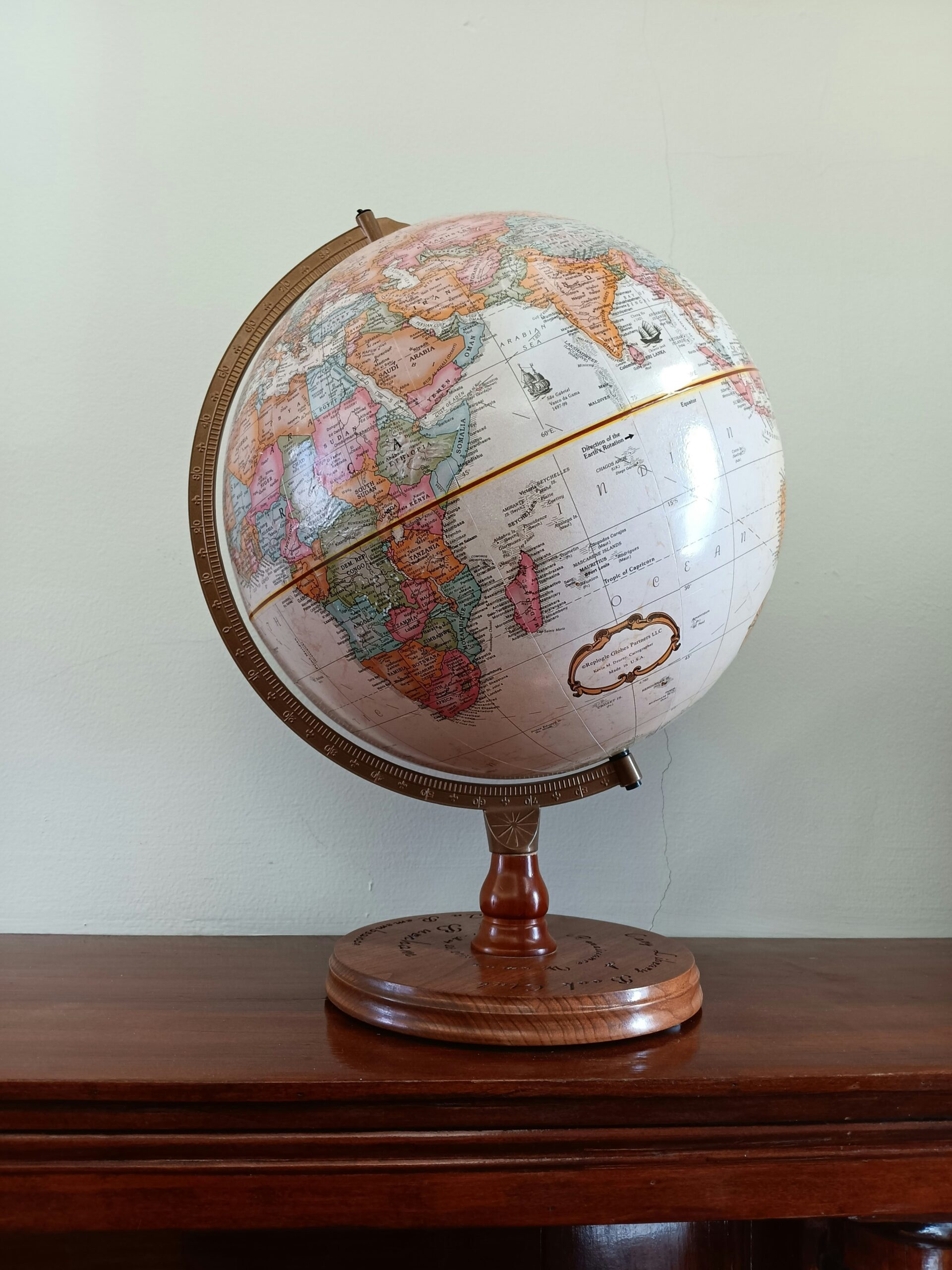
For an observer standing in Australia, looking toward the celestial equator requires facing true geographic north. Consequently, the apparent physical path of the planets is inverted:
Northern Hemisphere Observer (Facing South):
[East / Left] ───> [Culmination / South / Up] ───> [West / Right]
Apparent Diurnal Arc: Clockwise Rotation

Southern Hemisphere Observer (Facing North):
[East / Right] ───> [Culmination / North / Up] ───> [West / Left]
Apparent Diurnal Arc: Counter-Clockwise Rotation
While this apparent directional inversion changes how celestial motion looks from the ground, the zodiac’s geocentric zodiacal longitude remains constant. The zodiac is an absolute spatial coordinate system measured along the ecliptic plane from the Vernal Point. The planetary longitudes tabulated in high-precision databases, such as the Swiss Ephemeris (DE431/DE406 engines), are universal, geocentric coordinates.
A planet at 15° 42′ Taurus occupies that exact longitude whether measured from London, New York, Melbourne, or Sydney. What changes radically between hemispheres is the relationship between the local horizon, the prime vertical, and the ecliptic intersection points. This relationship governs the calculation of the Ascendant and the Midheaven.
The Midheaven (Medium Coeli or MC) represents the intersection of the local celestial meridian with the ecliptic. It is determined by the Local Sidereal Time (LST) of the birth or event moment:
alpha_MC = LST
Because the local meridian is a great circle passing through the terrestrial poles and the observer’s local zenith, the Right Ascension of the Midheaven (RAMC) is identical for any location sharing the same geographic longitude, regardless of latitude. A location at 37° 49′ S (Melbourne) shares an identical RAMC with a location at 37° 49′ N at the same terrestrial meridian.
The Ascendant (ASC), however, represents the eastern intersection of the local geographic horizon with the ecliptic. In the technical study of astrology aus scholars examine, this angle is calculated by solving the spherical triangle formed by the horizon, the celestial equator, and the ecliptic:
Plaintext
                  -cos(RAMC)
tan(lambda_Asc) = ──────────────────────────────────────────────────
                  sin(epsilon) * tan(phi) + cos(epsilon) * sin(RAMC)
Where:
Because the geographic latitude phi carries a negative sign south of the terrestrial equator, the sign of the vertical component sin(epsilon) * tan(phi) is reversed. This inversion creates the mathematical phenomenon of inverted signs of long and short ascension.
In mid-northern latitudes (such as Europe or North America), the signs from Pisces through Leo rise rapidly across the eastern horizon (signs of short ascension), taking significantly less than two hours to clear the angle. Conversely, signs from Virgo through Aquarius rise slowly, taking more than two hours (signs of long ascension)..
In the Southern Hemisphere, this relationship is precisely reversed:
┌────────────────────────────────────────┬────────────────────────────────────────┐
│  Signs of Short Ascension (Rapid Rise) │   Signs of Long Ascension (Slow Rise)  │
├────────────────────────────────────────┼────────────────────────────────────────┤
│  * Virgo                               │  * Pisces                              │
│  * Libra                               │  * Aries                               │
│  * Scorpio                             │  * Taurus                              │
│  * Sagittarius                         │  * Gemini                              │
│  * Capricorn                           │  * Cancer                              │
│  * Aquarius                            │  * Leo                                 │
└────────────────────────────────────────┴────────────────────────────────────────┘
Because signs like Virgo, Libra, and Scorpio pass across the Australian eastern horizon in as little as 45 to 70 minutes, an error of just four minutes in recorded birth time can shift an Ascendant by two full degrees.
Conversely, signs of long ascension like Pisces or Aries can linger on the eastern horizon for well over two and a half hours. This phenomenon explains why statistical distributions of rising signs in domestic demographic studies vary significantly from Northern Hemisphere clinical baselines.
A critical issue in modern horoscope syndication is the casual uncoupling of real-time planetary transits from domestic meridian offsets. Astrological ephemerides are traditionally computed for 00:00:00 Universal Time (UTC or Greenwich Mean Time). To calibrate dynamic transit cycles for astrology aus audiences, precise longitudinal time additions must be applied:
Local Civil Time = UTC + Delta T (Zone)
Australia encompasses three standard baseline time zones, augmented during summer months by daylight saving shifts:
When an international publication generates a daily horoscope australia consumers read online without regional calibration, it typically relies on an ephemeris cut-off configured for American Eastern Time (UTC – 5) or Greenwich Mean Time (UTC + 0).
Consider the concrete mathematical consequence of this offset during a lunar transit. The mean motion of the Moon along the ecliptic is roughly 13° 10′ 35” per solar day, translating to an hourly motion of approximately 0° 32′ 56”:
Delta lambda_Moon ≈ 0.549° per hour
Between New York (UTC – 4 EDT) and Sydney (UTC + 10 AEST), the meridian offset spans 14 hours. In 14 hours, the Moon traverses:
14 * 0.549° = 7.686° ≈ 7° 41′
A displacement exceeding seven and a half degrees is significant. It routinely moves the transiting Moon across sign boundaries (ingresses) and alters aspect orbs from applying to separating long before the Australian workday begins. A forecast warning a reader of an impending void-of-course Moon or an exact lunar-Saturn square during afternoon business hours may describe an energetic pattern that completed during the pre-dawn hours locally.
The selection of a house division framework is one of the most debated technical decisions in high-latitude and southern astrological practice. House systems fall into two primary categories: space/time quadrant systems (such as Placidus, Koch, Regiomontanus, and Campanus) and ecliptic-based whole-sign/equal systems.
In Placidus house division, intermediate house cusps (Houses 11, 12, 2, 3, 8, 9, 5, and 6) are derived by trisecting the semi-diurnal and semi-nocturnal arcs of ecliptic degrees between the horizon and the meridian. The formula for the semi-diurnal arc (D) requires solving:
cos(D) = -tan(phi) * tan(delta)
Where phi represents terrestrial latitude and delta represents the declination of the ecliptic point.
As geographic latitude |phi| increases, the product tan(phi) * tan(delta) approaches unity whenever planets attain high declinations (such as the Sun or Moon reaching maximum declinations near ± 23° 26′). In extreme temperate regions, this causes severe mathematical distortion:
In Southern Australia-such as Hobart (42° 53′ S) or southern Victoria (38° S)-these quadrant distortions complicate predictive techniques like secondary progressions and primary directions. When an intercepted sign occurs, planetary transits through that sign do not alter the house cusp ruler, creating interpretive challenges for timing events.
For this reason, practitioners of astrology aus-wide increasingly rely on the Whole Sign House (WSH) framework, the classical system of Hellenistic and early Indian astrology (Jyotish). Under Whole Sign division:
┌─────────────────────────────────────────────────────────────┐
│             Whole Sign House Structural Layout              │
├─────────────────────────────────────────────────────────────┤
│ 1st House (Somatic Self)      │ Entire Sign of Ascendant    │
│ 2nd House (Tangible Assets)   │ Next Sign in Zodiacal Order │
│ 3rd to 12th Houses            │ Sequential Signs (30° each) │
│ Floating Non-Cusp Point       │ Exact Calculated Degree MC  │
└─────────────────────────────────────────────────────────────┘
Using Whole Sign division preserves balance across all twelve operational arenas of life, eliminating intercepted signs while still integrating the exact astronomical degree of the MC and IC axes as high-intensity focal points.
In natal chart synthesis, the four primary angles-the Ascendant, Imum Coeli (IC), Descendant, and Midheaven-anchor psychological integration and practical life events. When tracking syndicated horoscopes australia readers turn to for personal insight, the relationship between these angles dictates how planetary cycles manifest in daily life.
To understand how planetary energy activates a chart, examine the structural differences between mutable and fixed angular crosses under Whole Sign division.
When Pisces sits on the eastern horizon (1° to 30°), the structural foundations of the individual’s experiential reality are governed entirely by mutable signs:
                    10H: Sagittarius (Fire)
                   [Vocational Horizon / MC]
                             ▲
                             │
7H: Virgo (Earth) ───────────┼─────────── 1H: Pisces (Water)
[Contractual Alliances]      │            [Somatic Self / Asc]
                             │
                             ▼
                      4H: Gemini (Air)
               [Domestic Sphere / Roots / IC]
When transiting outer planets (Saturn, Uranus, Neptune, or Pluto) enter any mutable sign, they trigger all four life domains simultaneously through dynamic aspect geometry (conjunctions, squares, and oppositions).
A major transit to the 10th house cusp does not remain confined to corporate status; it places stress on domestic stability (4th house square) and requires adjustments in interpersonal obligations (7th house square).
Because mutable signs fluctuate rapidly under dynamic planetary pressure, individuals facing vocational or familial crossroads benefit from objective chart synthesis. In the contemporary sphere of astrology aus practitioners develop, consulting enables clients to evaluate annual profections, secondary progressed lunar cycles, and local horizon coordinates to establish actionable timing windows.
In contrast to the mutable pattern, an Aquarius Ascendant establishes an angular structure governed entirely by fixed signs:
                     10H: Scorpio (Water)
                   [Vocational Horizon / MC]
                             ▲
                             │
7H: Leo (Fire) ──────────────┼─────────── 1H: Aquarius (Air)
[Contractual Alliances]      │            [Somatic Self / Asc]
                             │
                             ▼
                     4H: Taurus (Earth)
               [Domestic Sphere / Roots / IC]
Fixed sign angles resist sudden atmospheric variation. When tectonic transits cross these coordinates-such as Saturn establishing a multi-year structure or Pluto uncovering systemic inefficiencies-the tension accumulates until structural change becomes unavoidable.
Because the fixed cross governs balance sheets, tangible real estate, and long-term joint equity, the timing of legal incorporations and partnership contracts demands analytical precision.
Founders and executives frequently work with an astrologer in sydney to calculate electional timing windows (Muhurta) for commercial entity registration, capital deployment, and corporate governance restructuring.
Professional astrology distinguishes sharply between static natal potential and dynamic planetary activation. A natal chart is not a deterministic script; it represents a seed crystal of inherent psychological traits, physiological tendencies, and developmental imperatives.
To turn natal analysis into practical predictive guidance, practitioners use a rigorous, multi-tiered interpretive hierarchy:
┌────────────────────────────────────────────────────────┐
│  Tier 1: Radical Natal Chart (Static Capacity)         │
│  └── Planetary strength, sect, angular integrity       │
├────────────────────────────────────────────────────────┤
│  Tier 2: Primary & Secondary Progressions (Internal)   │
│  └── Progressed Moon timing, solar arc directions      │
├────────────────────────────────────────────────────────┤
│  Tier 3: Chronocrator Time Lords (Annual Activations)  │
│  └── Annual profections, Firdaria, Vimshottari Dasha   │
├────────────────────────────────────────────────────────┤
│  Tier 4: Dynamic Planetary Transits (External Triggers)│
│  └── Outer planet cycles intersecting radical degrees  │
└────────────────────────────────────────────────────────┘
Before forecasting events, the astrologer must evaluate the condition of the planetary rulers. This starts with identifying the chart’s sect:
If a natal planet is poorly situated-placed in an adverse house (the 6th, 8th, or 12th), combust the Sun, or hemmed by malefic aspects-it cannot produce exceptional results during a transit simply because an encouraging aspect occurs. Transits activate only what the natal chart inherently promises.
Secondary progressions operate on the symbolic ratio of one day of ephemeris movement equaling one tropical year of life:
1 Ephemeris Day = 1 Tropical Year of Life
Progressions reflect the internal evolution of the psyche over time. The Secondary Progressed Moon, which moves approximately 1° per month, serves as a primary developmental clock. As it passes through each house, it directs emotional focus toward that life area for roughly two and a half years.
Solar Arc Directions, which move every natal placement forward at the rate of the secondary progressed Sun (approximately 0° 59′ per year), highlight major developmental turning points whenever directed planets form hard aspects (0°, 90°, 180°) to natal angles.
Transits should never be read in isolation. In classical practice, time-lord systems establish which planets are “active” for a specific period:
Only after establishing natal capacity, internal progressions, and active time-lords does the astrologer evaluate daily and weekly transits. Transits act as the final triggers that precipitate events into concrete physical reality. Without support from the deeper tiers, an isolated transit usually passes as a brief mood or a minor conversation rather than a life-altering event.
The practice of astrology in Australia is upheld by established professional institutions that promote technical competency, verifiable education, and client safety.
Unlike jurisdictions where metaphysical services operate without peer oversight, Australia maintains a formal, nationally recognized qualification framework:
┌────────────────────────────────────────────────────────┐
│      Federation of Australian Astrologers (FAA)        │
│      └── Established July 8, 1970                      │
│      └── National Governing Body & Curriculum Design   │
│      └── Administers Four-Tier National Exam System    │
│      └── Awards: FAA Diploma of Astrology (Dip. Astro) │
└───────────────────────────┬────────────────────────────┘
                            │
                            ▼
┌────────────────────────────────────────────────────────┐
│  Association of Professional Astrologers Inc. (APA)    │
│  └── Peak Professional Body for Practicing Astrologers │
│  └── Mandatory Prerequisite: FAA Diploma or Equivalent │
│  └── Enforces National APA Code of Ethics & Conduct    │
│  └── Mandates Annual Professional Indemnity Insurance  │
└────────────────────────────────────────────────────────┘
Founded on July 8, 1970, the Federation of Australian Astrologers was formed to establish clear pedagogical standards across independent state branches.
The FAA administers a comprehensive, four-module examination process leading to the nationally recognized FAA Diploma of Astrology (Dip. Astro FAA):
The Association of Professional Astrologers Inc. (APA) serves as the peak professional body representing accredited practitioners across Australia.
Full membership requires an FAA Diploma or an internationally verified equivalent, alongside commitment to the enforceable APA Code of Conduct.
The core tenets of Australian astrological practice include:
Discerning consumers looking for the best astrologer in sydney or other major cities should always confirm whether a prospective consultant belongs to the APA or FAA. Verified affiliations help ensure the practitioner operates with genuine technical expertise and adheres to recognized professional standards.
To extract practical value from daily astrological forecasts, readers should follow an organized evaluation process rather than treating columns as absolute statements:
The effective application of astrology within Australia requires technical precision, historical awareness, and methodological discipline.
By grounding chart interpretation in spherical coordinate geometry, adjusting for Southern Hemisphere ascension rates, applying Whole Sign house divisions, and adhering to the ethical standards set by the FAA and APA, practitioners turn symbolic models into valuable tools for personal insight and conscious decision-making.
Astrologer Mukesh Choubey brings more than 16 years of dedicated clinical practice to predictive astrology, combining classical chart synthesis with technical precision.
Specializing in planetary period (Dasha) timing, electional chart configuration, and the D-10 Dashamsha framework for vocational alignment, his consultations emphasize ethical integrity and client empowerment.
Through his educational writings and private consultations, he helps clients navigate major career, financial, and personal transitions by clarifying the celestial mechanics, ephemeris calculations, and time-mapping systems that govern daily forecasting.
आने वाले त्योहार कब हैं और कैसे मनाएँ? भारत में प्रत्येक त्योहार का अपना धार्मिक, सांस्कृतिक और आध्यात्मिक महत्व है।

Finding the best astrologer in Brampton requires moving past sensational advertisements, overnight promises, and fear-driven remedies. As the cultural heart

Minutes ago from

Minutes ago from

Minutes ago from

Minutes ago from

Minutes ago from

Minutes ago from